
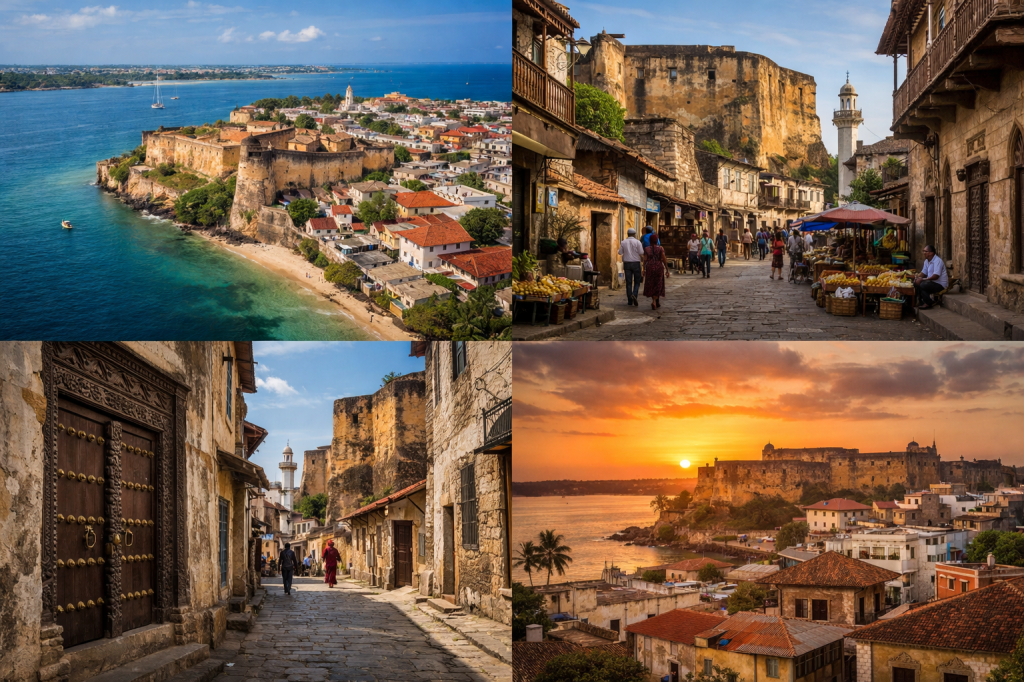
Mombasa remembers through food.
In the winding streets of the Old Town, memory rises with the steam of spiced rice, coconut broth, and cardamom tea. The air carries the perfume of cloves and charcoal grills, drifting between coral-stone houses and intricately carved wooden doors.
Here, recipes are not simply instructions.
They are archives.
Every kitchen holds a fragment of the Indian Ocean story. Mombasa’s cuisine is not a trend, not a fusion experiment, not a chef’s invention. It is a thousand years of the world passing through one kitchen and staying for dinner.
To understand Mombasa’s food is to understand its geography. This is an island city, technically a coral island, separated from the mainland by two creeks that have sat at the crossroads of the Indian Ocean trade routes since at least the 11th century.
The Arabs brought fragrant rice dishes, slow simmered stews, and the generous use of cardamom, cinnamon, and cloves. Their influence still lives in the coastal biryani and the delicate balance of spice that defines Swahili cooking.
The Portuguese, who built Fort Jesus in the sixteenth century, left more than architecture behind. Through their global maritime routes came new ingredients that reshaped cooking across the region: chilies, cassava, and new cooking methods that gradually found their way into coastal kitchens.
Then came the Indian merchants, who added another layer to the culinary fabric of Mombasa. They introduced techniques of spice blending, lentil dishes, frying methods, and beloved street foods. From this encounter emerged things like viazi karai, turmeric-coated potatoes dipped in gram flour and fried until golden, served with tamarind chutney that wakes every corner of the tongue.
Mombasa did not replace one cuisine with another.
It absorbed them all.
And in doing so, it created something uniquely Swahili.
The cuisine of Mombasa is inseparable from the ocean. Coconut trees lean toward the sea, and their milk finds its way into almost everything: fish curries, rice dishes, and even desserts.
The Taste of the Coast
A typical coastal table might carry:
- Biryani ya Pwani — rice fragrant with spices and slow-cooked meat
- Samaki wa Kupaka — grilled fish brushed with coconut sauce
- Viazi Karai — crisp street-side potatoes dipped in tamarind
- Mahamri — soft, slightly sweet coconut doughnuts scented with cardamom
- Kahawa Tungu — strong, spiced black coffee served in small cups
These dishes are not merely meals.
They are stories served on a plate.
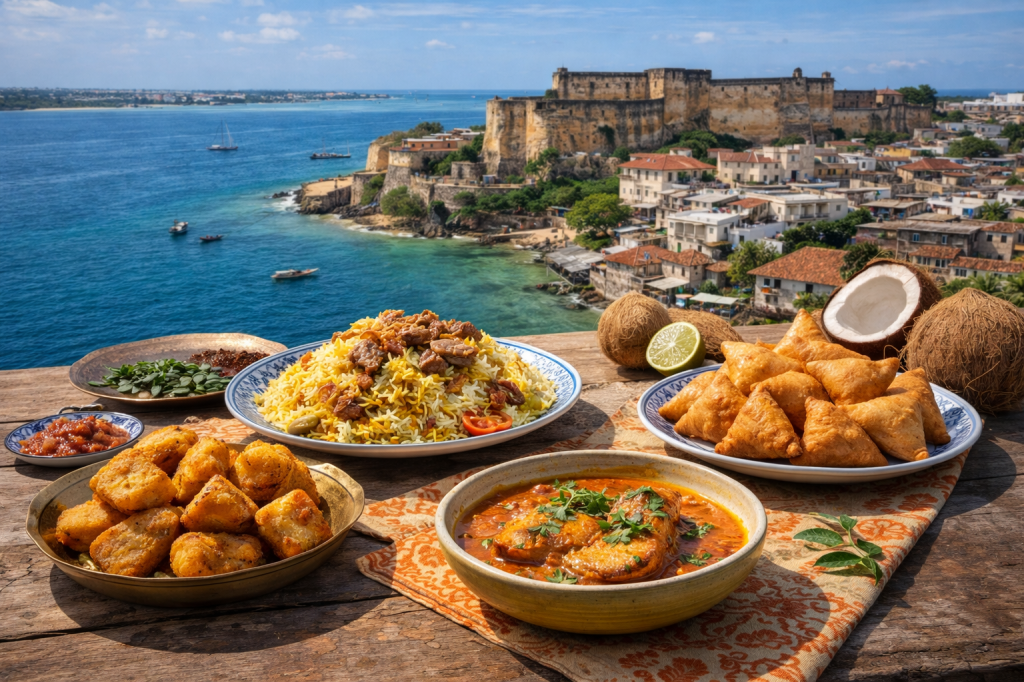
Fort Jesus stands nearby, stone walls watching over centuries of arrival and departure.
Empires came and went.
Ships arrived and sailed away.
But in the kitchens of Mombasa, the memories remained.
They live in spice jars passed from grandmother to daughter.
In rice dishes perfected through generations.
In the unmistakable aroma of coconut and charcoal drifting through the narrow streets.
And so Mombasa continues to remember not in statues or documents, but in something far more intimate.
In food.
Faithful Steward,
Reflections on Food. Faith. Culture. Life
 FAITHFUL STEWARD CHRONICLES
Leave a comment